Life-saving flights with fewer emissions
MAF flights fundamentally change the lives of people in remote regions – and a new CO₂ offsetting programme protects both the environment and families in Madagascar through a cookstove project.
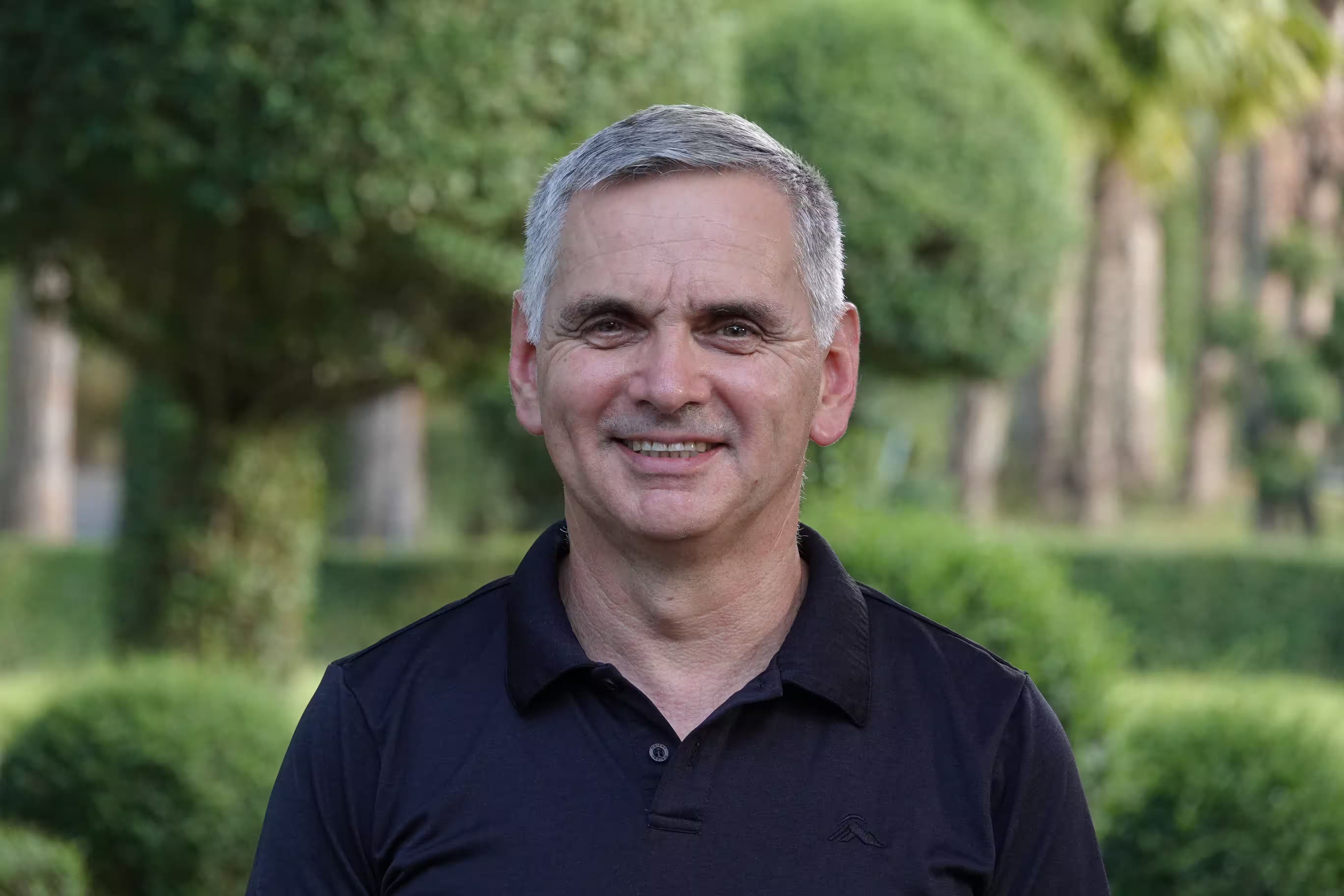
Driven by his Christian faith, Phil Sproul is passionate about helping people in remote villages in practical ways – and about MAF making exactly that possible. At the same time, as Director of Technical Operations at MAF International, he wants to tackle the environmental impact of flying head-on. In this role he leads the entire aircraft fleet, and he is proud that all Cessna Caravan flights are now climate-neutral.
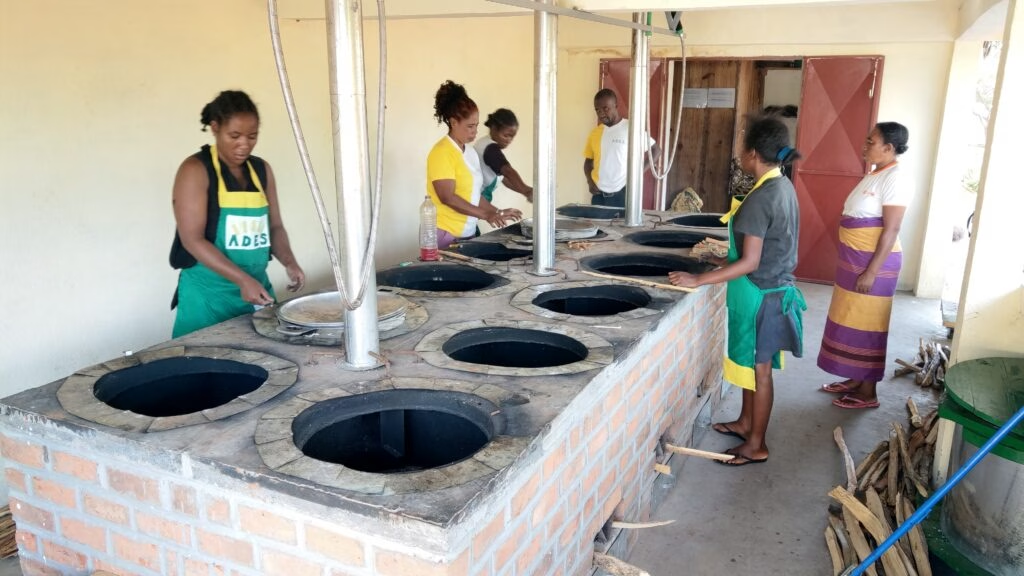
The CO₂ offsetting programme covers all 31 Cessna Caravans – the workhorse of MAF’s fleet – and funds efficient cookstoves for Malagasy villages. Cooking over an open fire indoors causes respiratory illness, especially among women and children. The new stoves save wood, protect forests, reduce smoke and give families back their time. Under Textron Aviation’s Sustainable Advantage programme with partner 4AIR, tangible improvements like these are taking shape.
The future: greener flying in our sights
For Phil it is clear: “God entrusted the earth to us – and told us to take good care of it.” To put it in context: the total annual CO₂ emissions of every MAF aircraft come to less than 105 single London–New York flights on an Airbus 350 or Boeing 787. Or, put another way: 575 families watching Netflix for a year.
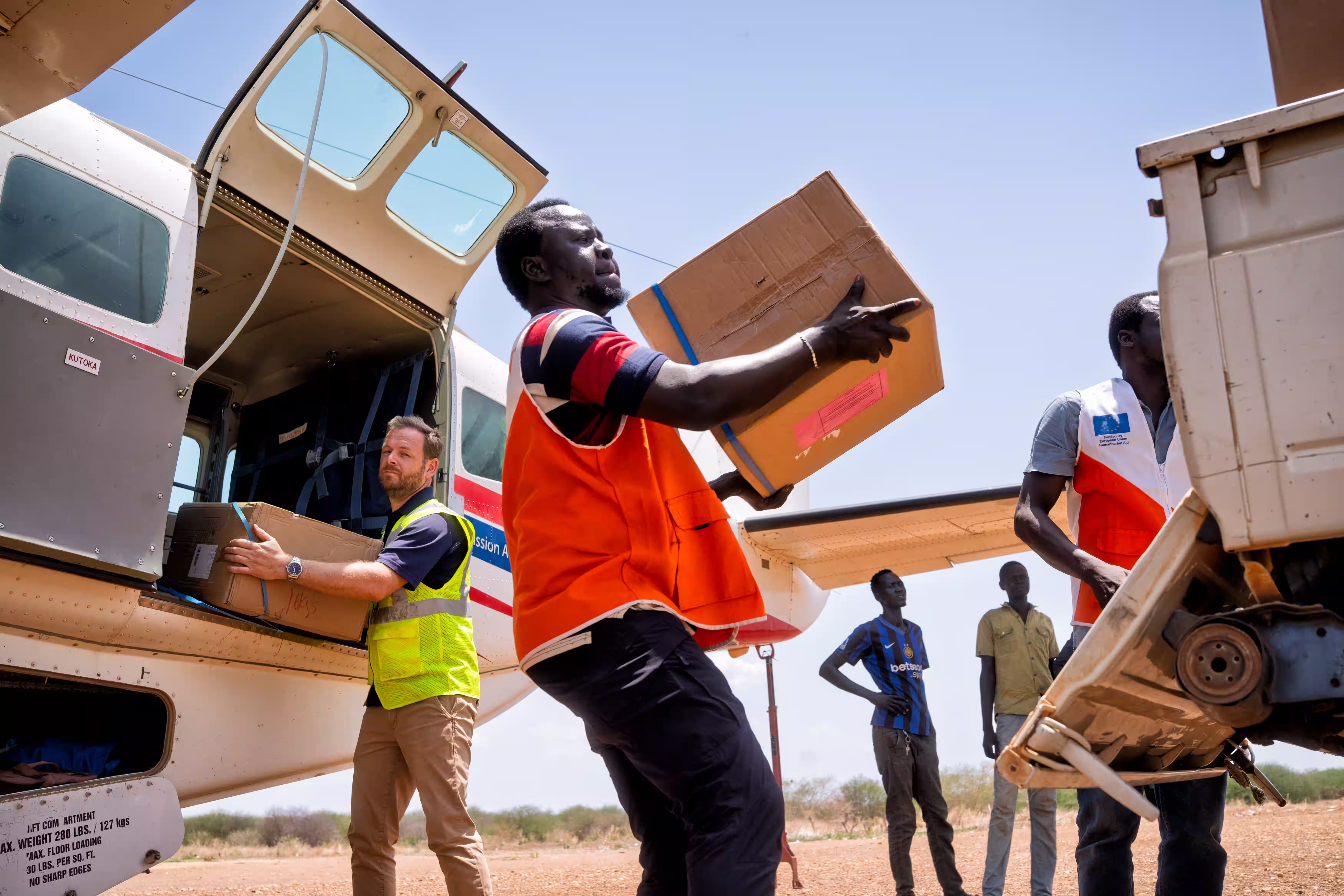
Phil stresses that climate protection is essential, but that we must never forget the difference each MAF flight makes. “Without an aeroplane it takes forever to reach the village when someone is injured or ill, or to transport vaccines refrigerated.” The conclusion: the life-saving effects far outweigh the emissions.
This is the first step towards MAF’s goal of cutting emissions per flight by 30 per cent by 2035. Phil’s team is already testing sustainable aviation fuel (SAF) and monitoring electric and hydrogen propulsion. “We are looking at what is realistic in the short term and feasible in the long term,” he says.
Impact on many levels
· Local entrepreneurs generate an income by selling cookstoves
· Families save money because they need less firewood or charcoal
· Better health thanks to improved air quality
· For every new stove, two tree seedlings are planted on the island
· Local environmental education becomes tangible and accessible to all