Wanakipa: where the aeroplane fills the shelves
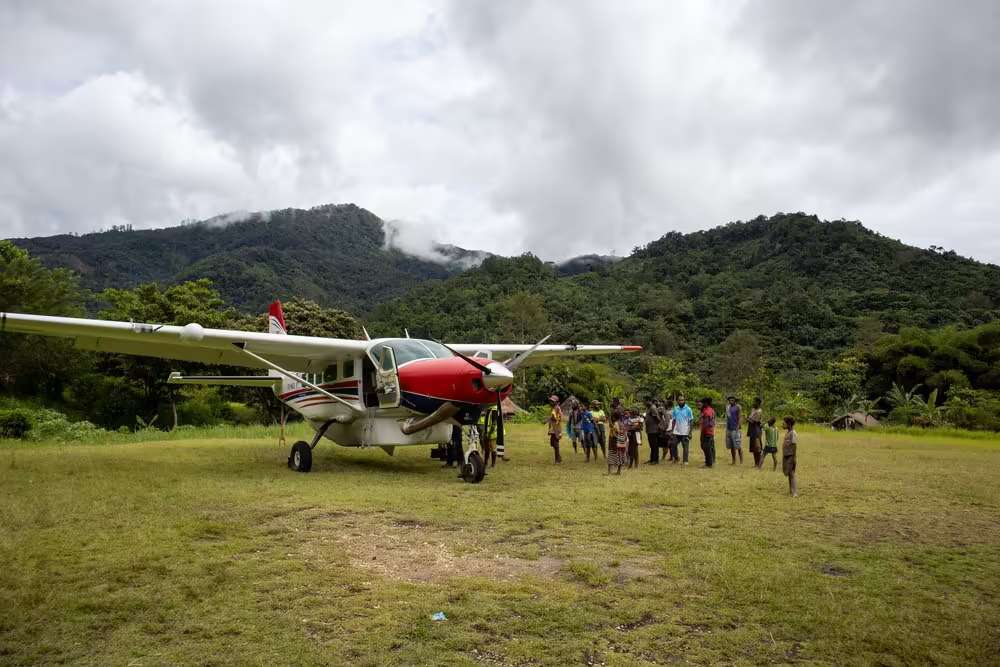
Wanakipa in Papua New Guinea lies surrounded by forests, mountains and raging rivers – cut off from the outside world. Its only link is a small grass airstrip on a hill: the lifeline that lastingly improves living conditions

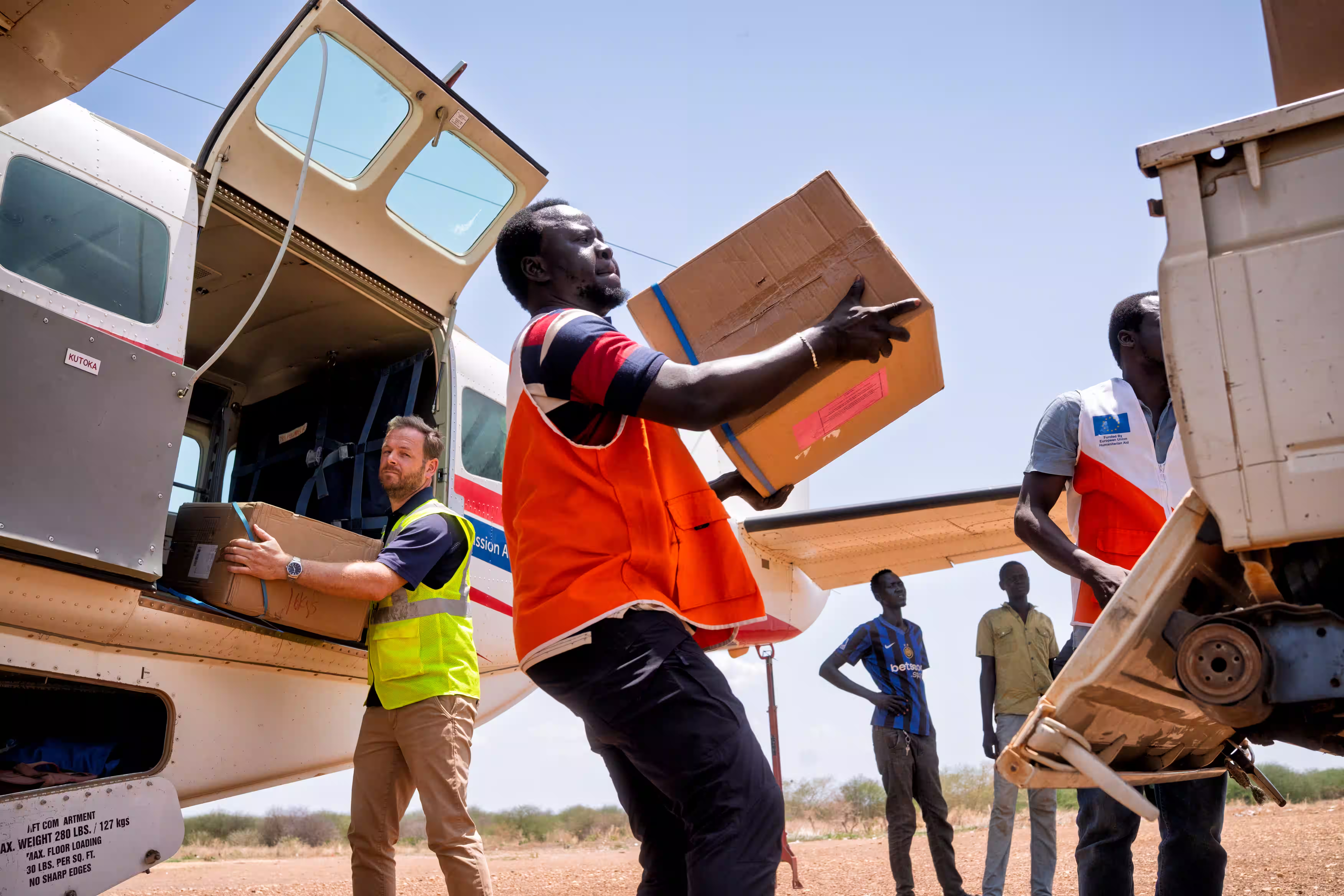
The Cessna Caravan carries not only people but also essential goods such as rice, salt, fish, oil, pasta and soap to Wanakipa. Joe John, one of two shopkeepers in the village, sums it up: “The air route is the only way to get goods. Without MAF our shelves would be empty.” His words underline how existential our flights are for Wanakipa.
In many remote villages in Papua New Guinea, traders like Joe depend on MAF to obtain their goods. Their income allows children to go to school, while the stocked shelves are an important basis of life for the village community and for staff from other aid organisations.
But MAF does not only deliver food. MAF also transports building materials, newspapers and phone cards. Eric Lomba, a local helper, explains: “With the credit I can make a connection to the outside world and so help people here. If a MAF aircraft did not come regularly, the phone would be useless.” These examples show that MAF does far more than fly.
Isolation: Rural Access Index (RAI)
Papua New Guinea’s RAI (Rural Access Index) is 43. This means that 57% of the rural population do not live within 2 km of an all-season road. The rural population numbers 8,963,865 people. It follows that an estimated 5,109,403 people have no access to an all-season road. That is roughly half of the total population of 10.4 million.